
The Longhorn
two breakfasts

When I was a kid I lived in an old wooden house on a hill with a big garden and a piano. The paint on the house was peeling and the garden was overgrown. My parents owned a VW bug that was already thirty years old when they got it and had no paint left on it at all, only primer. My mom made her own clothes and curtains and built things out of wood and cooked Indian food and Mexican food and Thai food and buried large glass bottles full of cabbage in the backyard to make Kimchi. We had a cat named Claude Simòn and a dog named Gaji, which means “eggplant” in Korean. My mom played violin and piano and gave music lessons in the living room. My dad taught literature at the university three days a week and on the other days he read books in the dining room and wrote them in cafes and the library. My parents weren’t rich but had come from wealth so life felt comfortable and full of opportunity. Even if, during rough patches, they sometimes struggled to buy groceries or clothes, you got the sense that money was never very far away. On weekends my parents gave dinner parties for their friends and my dad’s writing students and colleagues at the university. Sometimes they barbecued. The barbecue was just a hole in the ground surrounded by rocks with a grill balanced on top of it. In the summers my mom studied music pedagogy at universities around the country, and sometimes I went with her. Other times I went to music camps on my own or my parents took me on train trips to visit New Mexico or on ferry trips around the Puget Sound.
There was a big vegetable garden in the backyard. I liked to pick radishes for my dad, who ate them straight, with a grin. “Delicious!” He’d say. “Deegusting!” I’d say back. Sometimes there was rhubarb which meant pie. Later there’d be corn on the cob. The nasturtiums came in the spring. They grew where the light was soft and the air felt good. My mom would pick the leaves and put them in salads and on my birthdays she used the flowers to decorate my cake. I thought there was nothing more beautiful.
There was an empty lot behind our house. The lot had been taken over by ivy and trees. It was shady and quiet. There was a crumbling wall and some old stone steps where a house had once been. I liked to sit there and read. Sometimes I thought about my own yard on the other side of the fence. I knew it was there—full of sunlight—and that my house was there, with my parents inside it, but it was hard to believe. It was dark under the trees but felt safe. I came to think of the place as my own—a secret. I sat there for hours and pretended I was someone or somewhere else. When I got hungry I went home.
My dad had a kind of second, different inner life, or a past—one that he wrote, but never spoke much—about. He showed me, a little, instead. He was quiet in general and the deepest sense I got of him came from this quietness and it was a sense of what I felt was most important about or integral to him. It wasn’t books and writing—the kind of stuff that he taught and talked about day-to-day—but his life before he had become a writer, when he was a cowboy—and had to do with the country, and land and horses and farm animals and ranches and the people who worked them.
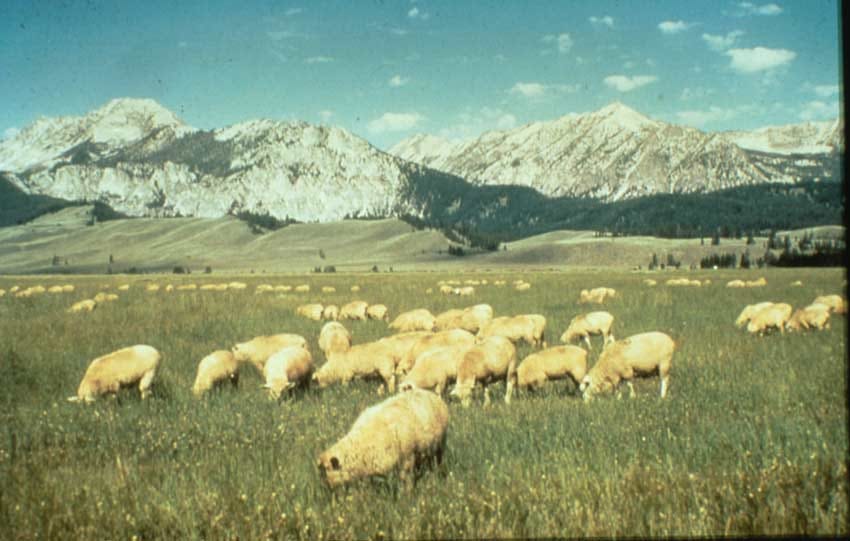
There was one story he told though: before I was born, a group of Basque shepherds had come to work in California; they were friends of an old cowboy friend of his—and he had gone with my mom to their camp to meet them. The shepherds had prepared a big lunch which they all ate together out in the field, and my mom was the only woman there and she enjoyed it, because the shepherds made much of her, and my dad enjoyed it too—them making much of her—and he always told that part of the story with a grin. The Basque shepherds tend to be a very handsome species, I gather. But that was the last time he had had anything to do with that life, and for a long time it was the only story I heard about it.
Sometimes my dad and I would get in the bug and drive all the way up the mountain, past the lake, and down into the Santa Ynez valley where he had worked on ranches as a horse trainer. If it was spring the valley would be covered with orange poppies and blue lupin. It was quiet out there, just rolling hills, scattered stands of oaks. Sometimes there might be a side road leading off to another valley where, my dad told me, there was a ranch, maybe one he had lived on, or maybe he knew the owner. Sometimes we would see an ad for a rodeo, and then he might mention that he’d ridden in that one, long before I was born.
Just before the town of Santa Ynez there was a little parking lot with a few businesses, including a diner called the Longhorn Cafe, and that’s where we were headed—for the eggs, my dad said, and for the drive there. The Longhorn cafe served breakfast and lunch and was full of ranchers and waitresses and not much else. I felt out of place, but then there was my dad, who, even with his book-learning and his literature-teaching job, was somehow also a bridge to this other world. The waitresses were terse but respectful and my dad seemed unfazed by any of it and after a while I would start to relax. I always got the short stack, and eggs, and my dad and I would sit there and eat, not talking much, and sometimes I thought I was bored.
My mom was a true bohemian; no cowboy roots there, but she also had things she did sometimes that didn’t fit into her regular day-to-day roles, and for one of them at least she brought me along. The way it went down was like this: very early, maybe 4 or 5 in the morning, while it was still dark, she would get me up and we’d go to the kitchen where she’d boil milk in a saucepan while I grated a thick round cake of Mexican chocolate into a tall pile. She would add the chocolate to the hot milk and whisk it until it was foamy, we’d drink some and she’d put the rest into a metal thermos. She would fill a big backpack with newspaper, a large cutting board, a loaf of sourdough bread, a knife, eggs, tin plates and cups. A grill top. A frying pan. Butter. We would get in the bug and drive to the ocean, the only car on the road. It was still dark when we got there. We would walk down the beach for a while and then we would stop and my mom would get to work making a shallow hole in the sand while I collected driftwood. When we had enough wood she would build a fire. She crumpled up the newspaper, put some of the smaller sticks on it, and lit the paper beneath them. Once they were burning she added the bigger sticks, and after the fire was really going she would lay the grill across it. She put the frying pan on top of the grill and some butter in the pan. When the butter was melted she cracked some eggs in and fried them. She cut off thick slices of the bread and fried it alongside the eggs and when it was ready she put it all on our plates and we’d sit there and watch the sun rise and eat breakfast. Sometimes a homeless man might wander up out of the fog and we would share some with him, but mostly the rest of the world was asleep.
What a childhood. I love your blithely eccentric parents.
The story of two breakfasts, two parents, two people who existed before you and little glimpses of their earlier lives. Brilliant, Anna!💕